Wednesday, 25 June 2014


What exactly is the ‘body’ of a wine? I'm sure by now you've come across the terms light, medium and full bodied. However, I still have a lot of people asking me what exactly do these terms mean.

To put simply the body of a wine is influenced by its alcohol content, tannin concentration and grape types used as well as certain wine-making methods used.

To really understand the difference between ‘bodies’ let’s try a quick experiment it with something similar, like milk  for example!

You’ll need a cup each of skim milk, 2% milk, whole milk and heavy cream for this experiment. Try the milks from ascending order of richness beginning with skim and ending with the heavy cream. You will feel the difference in texture and how the milk coats your mouth from light to heavy! The skim milk will disappear quickly from your mouth whereas the cream will create a coat on your tongue.

That’s exactly how wine is! A wine with a heavier body will leave a sense of richness in your mouth. Now you know!


Wednesday, 18 June 2014


Organizing a wedding can be a stressful time for most people. Choosing wines for a wedding can add to that stress as it can be tricky! What you usually like to drink may not be what the rest of your guests prefer – let alone be within your budget!

Here are a few tips on how to choose the perfect wines for the day:

Wines for pre-dinner cocktails: 
Bubbly wines are very popular for any celebration, especially weddings! Champagnes are the most famous of them all, but they are fairly expensive and may take up a big chunk of your budget. As an alternative you can go with a very nice Cava (from Spain) or Prosecco (Italy). Their quality can be very similar. In fact, the only difference is that they are half the price.
Alternatively, Rosé wines are a great way to start a party, and save the bubblies which are great for desserts or the after-party.

Selecting the mix:
Do not over-complicate things; choose one wine of each type (white, reds) for the dinner. It's not necessary to try and match every single dish with different wines.

Selecting your dinner’s wines:
Try to find wines which will please a wide range of people, without being too generic. Unless you are willing to spend some time explaining the wines to your guests, it may not be advisable to choose something too ‘geeky’ with unknown grapes varietals. Instead stick to more ‘classic’ types like Sauvignon Blanc or Chardonnay for whites, and Shiraz or Cabernet Sauvignon for reds.

Working with a Budget:
This will most likely be the most important part of your final wine selection decision! Wines in Malaysia are not very cheap, and weddings are already a costly affair. However, you shouldn’t choose your wines solely on whether they are the cheapest! You can most certainly find bottles around RM30 in Malaysia, but these are the cheapest, mass-produced wines in the market, and the quality is a fair gamble, that also comes along with a tougher side-effect (cheaper wines use more preservatives like Sulfur, which causes faster hangovers!).

If your budget is RM40-45, choose a wine from the New World (Australia, Chile) which usually offers easy-drinking good value wines in that range – easier than French for example. If your budget is RM50-70 per bottle, you have a wide range to choose from! Between a nice South African, a rich Aussie Shiraz, a smooth Argentinean Malbec or a stylish French, you can pick your favorites without too much risk. You can serve more premium wines, but I don’t believe it is necessary as many people will actually prefer a more ‘simple’ wine than something overly complex!

How much to order: 
This is always a tricky question. A safe bet would be 1 bottle for 2-3 people, but there are some variables. You should ask yourself a few questions:

  • At what time will my event start and how long will it last? The longer the cocktail/dinner/party, the more wines you will need 
  • What other alcohol are you serving? – If you also offer beers and spirits, you may need less wines 
  • How many people from your party actually drink wines? Maybe you do not need to include everyone in your total. However, it is better to have a little extra wine than not enough – ordering 1 or 2 cases on top of your estimated number will prevent any eventuality. And you can have some of your ‘wedding wines’ to enjoy for the next few months! 
Ultimately it is most important that you and your guest have a good time, good food, and good wines! Plan for your wines a few weeks before the big day as it is an easy box to tick on your do-list!

Let us help you pick out your wines!
All you have to do is fill in this form (even if you don't have most of your details figured out), and one of our wedding wine experts  will be in contact with you to have a chat!

Thursday, 12 June 2014


Source
A bottle of good wine always makes a good gift for a special occasion or dinner parties. But you can always jazz your gift up a little more by gift wrapping or decorating them! Here are some interesting ways to decorate and present your wine gifts!

1. Use a tea towel with an interesting pattern and tie it up with ribbon.  Your friend will now also have a tea towel he or she can use to serve the wine too!

Source
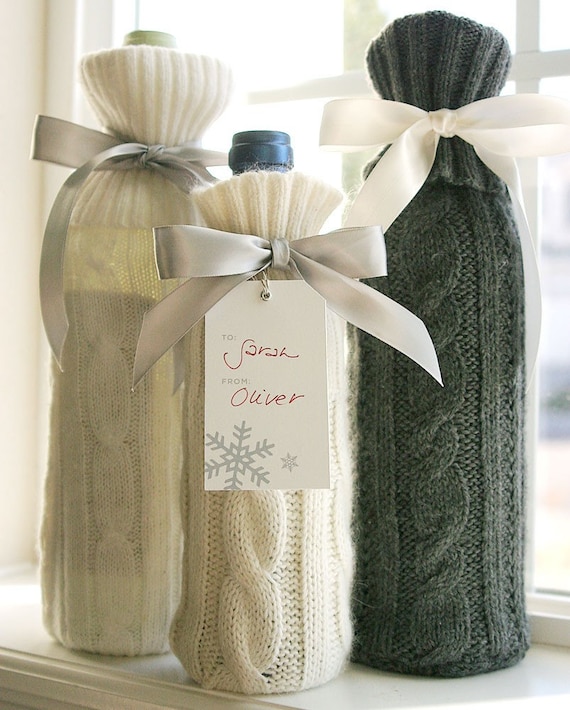
 2.  Cut off the sleeve from an old sweater and sew up one end for a pretty, upcycled solution!

Source
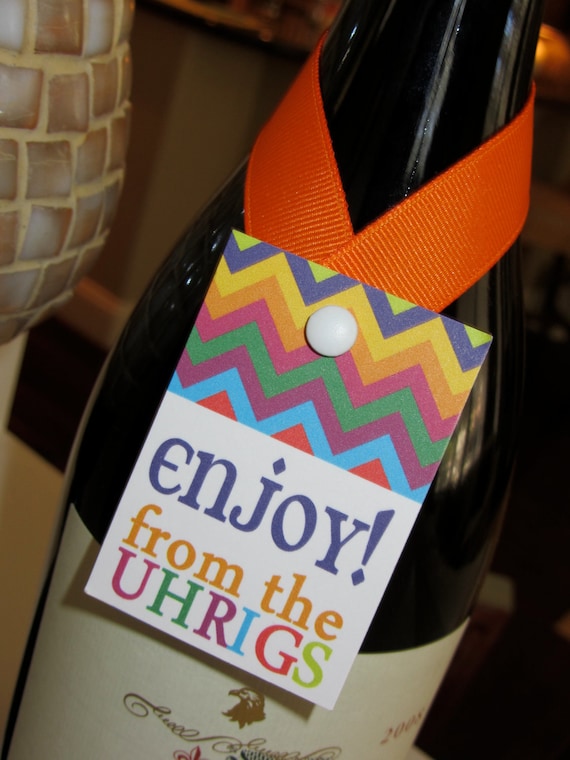
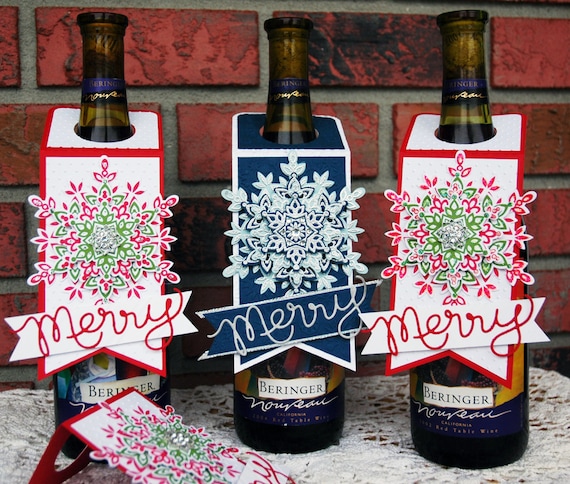
3. Make your own tags with a message on a card and some ribbons. Or cut a hole at the top to fit the top of the bottle through.

Source
Source
4. Make your own wine labels to wrap around the bottle!

Source
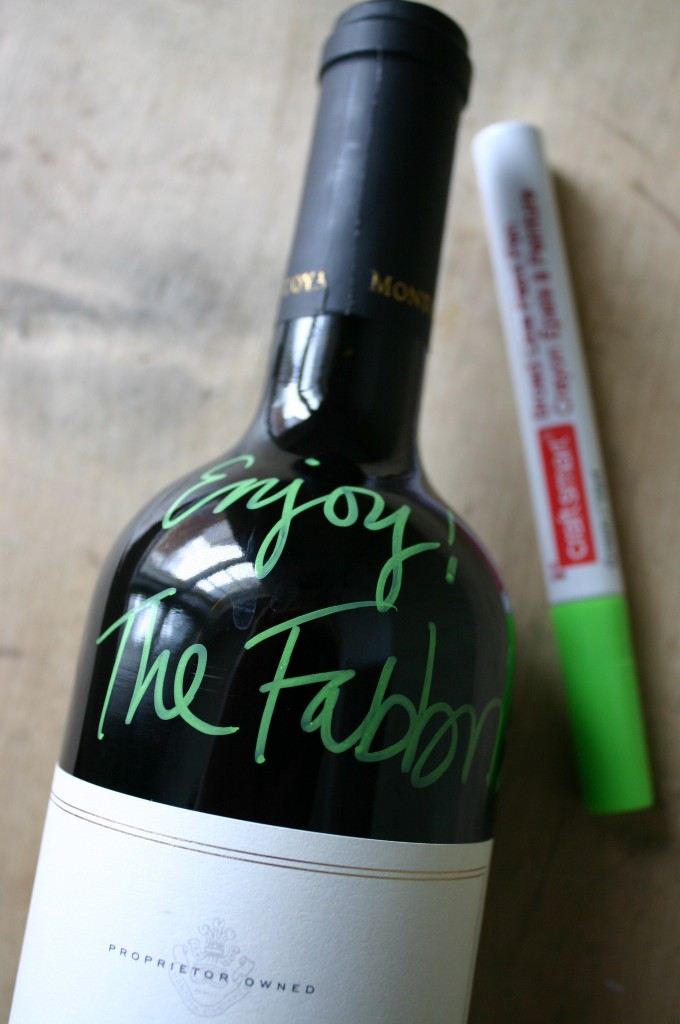
5. Keep it simple and just use a paint pen to write a personal message on the bottle itself!
Source
There are, of course, many ways to present your wine. If you know of other ways to decorate a bottle of wine, share them in the comments below! 

Ultimately, the content of the bottle is the most important! Feel free to talk to us if you need help picking out a wine gift for someone. We can also gift wrap it and deliver it on your behalf!

Tuesday, 10 June 2014

Tucked away in the corner of the Cantabrian Mountains in the north, and following the Ebro River, La Rioja is one of the most majestic wine regions in Spain, if not in the world. In a place where time seems to have forgotten long ago, the traditions are still very strong and deeply rooted in the soil and vines which produce some of the most splendid Spanish wines.

La Rioja got its name from the Oja River (Rio Oja)which crosses the area and is divided into 3 sub-regions, each which different characteristics: Rioja Baja, Rioja Alavesa and Rioja Alta. Vines have been present in the region for centuries, dating back to the Phoenicians. The earliest traces in writing mentioning La Rioja wines date back to 873. La Rioja is the first of the only two regions to be classified as as Denominación de Origen Calificada (DOCa), the highest ranking in the country, by the Denominación de Origen (Spanish Wine Council); the other being Priorat.

85% of the wines produced in the region are red (Tinto). The remaining is spread between white (Bianco), Rose (Rosado), and a small amount of sweet wines, which are slowly coming back into fashion, after decades of abandonment. Traditional Spanish grapes are of course highly dominant, but a small proportion of ‘International’ grapes (Cabernet Sauvignon, Merlot) can be tolerated in the blends. For the white wines, the king of the region is the Viura (also called Macabeo), and can be blended with Malvasia and Garnacha Blanca. The Viura offers good acidity, fresh fruits and aromas, while the Malvasia adds some fragrance and Garnacha Blanca givies body and structure to the wine.

As for the Rosados (rosé) and red wines, Tempranillo rules in the region, but it is generally blended with some other varietals like Garnacha, Mazuelo and Graciano. Tempranillo (which needs to make up a minimum of 60% of the blend) brings the main flavors and tannins for the ageing; Garnacha brings color and body while Mazuelo and Graciano add complementary flavors and aromas. The blending in the region is an art itself. Due to the historic presence of ‘International’ varietals, some Bodegas are allowed to use them in their blends, but in a limited amount.

 Traditionally, many wineries aged their wines for a long period of time in old barrels, which created classic wines with delicate colours, slightly oxidized flavors of caramel, coffee and roasted nuts. Nowadays, some Bodegas tend to age their wines for a shorter amount of time, offering more fruity flavours and tannins. Also, a much higher percentage of new oak barrels are used, making the wines richer and more concentrated. The region, while adapting to the modern markets and demands, will continue to keep close to its own roots and tradition. The Bodegas, dominated by family-owned domains, will continue to work closely with local grape growers and cooperatives, in order to keep the ancestral history going, and to continue to produce the most stunning, delicate and long-living wines from this country.


Wednesday, 4 June 2014

So what's the deal with TERROIR?

The ‘Terroir’ represents the complete surrounding of a vineyard. The better the terroir is, the better the quality of grapes you will get – and directly the better potential to make great wines. It encompasses many elements but there are 3 main ones:

Type of soil
Vines need to have a tough life to grow good quality grapes. If the soil is too good, the vines will become ‘lazy’ and produce lower quality grapes. The best soils are porous (if the water goes deep into the soil, the vine will have roots going deeper to find it, becoming stronger) and have sufficient elements to add specificity to the grapes.

Location
The geography of the environment is important too. The best vineyards are usually situated on slopes or even hillside. Flat lands have more tendency to retain water, when on hillsides, the water will simply roll down the hill, leaving to the vines just enough. Slopes have also better exposure to the sun.

Weather
Vines need water & sun but not too much. The balance must be perfect to arrive at the upmost condition for the vines. Too much rain will cause overproduction of grapes; Not enough will cause a drought, and the production may be uneven and low. Some countries allow irrigation but it is mostly forbidden in Europe for the higher classification wines.

Areas combining the best of each element may have potential to produce higher quality grapes. It is the job of the winemaker to help reflect that in the wine.


Thursday, 29 May 2014

You may have heard the terms ‘Old World’ and ‘New World’ of wines before, but maybe you are not really sure what exactly what it means? Well, this is a little introduction:

‘Old World’ encompass the wine producing countries based in Europe solely – France, Spain, Italy, Germany or Portugal for the most renown ones, but also Switzerland/Austria/Bulgaria/ Moldavia/Croatia/Ukraine/Russia/Greece, or even England (much more recent, but they do produces some more than decent sparkling wines). These countries have a very strong history with wines, with some areas known to have grown grapes for over 2,000 years.

The tightly rooted traditions means that the production is very regulated according the regions specificities, and producers tend to showcase more of the typicality of a small areas rather than of a definite grape itself; this is why wines are often made from a blend of different varietals, from 2 types to up to 18 for some villages! Many producers won’t be listing the grapes varietals on the labels itself, either by choice, or because the actual classification won’t allow them. Many areas do not allow irrigation and would be much more dependent on the weather condition for the growing season, so quality will vary according to the vintages, especially for the more premium wines.

The ‘New World’ corresponds to wine producing countries in the rest of the world, including Australia, New Zealand, USA, Argentina, Chile, South Africa, but also Uruguay/Brazil/China or even India. The oldest areas were in South Americas, where grapes were introduces 300-400 years ago y Missionaries, but in some wine region in other parts of the world, vines where planted only 30 years ago. The regulation, while still present, would be a bit looser than in Europe, and wineries will have more liberty to produce wines. Irrigation is mostly present everywhere, especially in very dry area like in Australia, so the producers can control more the grape volume of production – making it slightly easier to have a consistent flavour profile year after year. Much of the production would be for single varietal wines, and almost always indicated on the label – making it easier for most of the people to understand and purchase.

The origin of the wine doesn’t guarantee the quality or the simplicity of the wine, this is why I encourage you to open your horizon and discover wines from across the world, do not focus in a single varietal or country/ region, there is enough good wines across the world to have a great and fun Journey into great wines.


Wednesday, 21 May 2014

 With Malaysia’s weather not being the best for wine it's important to store your wines properly in order to get the best out of them. A wine storage cabinet is a great solution to keep bottles for a long period at perfect conditions, without risk of spoilage. However, you may not have the space or need for one. But there’s a way to get around this, as long as you do not intend to keep your precious bottles for a few years.

The best way will be to store your bottles in a room without windows (the sun is a wine’s nemesis!) and without large changes in temperature.

A kitchen cupboard is not the best place, because of the heat from the cooktop or oven. This is why we offer a minimum order of only 3 or 6 bottles at a time so the quality of the wines are preserved by avoiding cramped storage space with too many bottles at once.

That said, if you have a good wine cabinet, you will be sure that your wines are stored at perfect conditions and environment. A simple fridge is not good for long time storage as the humidity is too low. It may dry-out the cork and risk to damage your precious wines. There’s nothing more disappointing than waiting for years for a bottle to arrive at maturity, and finding it out it is corked when you open it!

If you have a bottle opened and want to save some for tomorrow, the best thing to do is to place the cork back and store it in the fridge – even for the reds. If you keep the bottles outside, it will spoil sooner. Some bottles will be good for a few days to a week (it may even get better!). While others may start to fade out after a couple of days. Only way to find out which ones is to try!


Wine Talk is Malaysia’s premier online wine delivery service where you can buy, purchase or order wines online and have them delivered to your doorstep. Wine Talk delivers to KL, PJ, Selangor, Johor Bahru and other cities within West Malaysia. Wine Talk’s wines are personally selected and handpicked by sommelier David Stephan. And with Wine Talk’s promise --- Guaranteed Satisfaction, Guaranteed Price, Delivered To Your Home --- wines are now even more pleasurable. With more than 400 labels of wines, you can easily find wines to suit your taste. Wine Talk’s Wine Club is the first of its kind in Malaysia. The Wine Club is an exclusive service with no membership fee wherein members will receive wine cases on a monthly or bi-monthly basis, free delivery included. Members will receive great value wines with a different selection every time, handpicked by David. The selection will feature popular labels and also fun discoveries, which a lot of people may not have thought to try. It comes with a personalized booklet that details the history of the winery, grape varietals, tasting notes, food pairing and more. Wine Talk also provides wine advice for events such as weddings, parties and gatherings. David Stephan makes wine selection easier with his experience on food and wine.
Wine Talk Malaysia – Great Wines Made Easy.


© 2012. Design by Main-Blogger - Blogger Template and Blogging Stuff