Thursday, 2 October 2014


Many of us have been there. You're at a dinner party with a great bottle of wine. But you forgot the corkscrew... There's no reason you have to suffer through a wine-less dinner.

The shoe method went viral sometime ago but there are other ways to get your bottle open without getting dirt from under your shoe onto your wall.

Check out FoodBeast's video guide above on how to open a bottle of wine without a corkscrew. Pretty genius though some of them seem kinda hard to do.

The final method, however, is kind of a terrible idea unless you want to get glass in your eye or at best, ruin your lovely wine.

Do you know of any other tried and tested way to uncork your bottle of wine without a corkscrew? Leave and a comment and let us know!


Wednesday, 24 September 2014


Tannin is a French wine term, actually coming from an old German word (Tanna, which means oak or fir tree).  It is a natural biomolecule contained in grapes, as well as in tree barks, leaves, roots or seeds.  It has been used for centuries by tanners to process animal skins into leather.

Grape's tannins are contained in the skin and seeds. During the fermentation period of red wines, the grape juice is left in contact with the skin to extract color and phenolic components which will bring astringency and acidity to the wine, which will help in the ageing of the wines.

Wineof ‘entry-level’ prices (below RM55) are made with grapes from young vines, producing a fair volume. The tannin content of these wines will not be very high – so they can and should be enjoyed early as they won’t evolve with time.  On the other side, more premium reds come from old vines, giving low volume of grapes, but that are rich with tannins.  The extracting of those tannings will take longer. The wine is then aged in oak barrels, which will concentrate the tannins even more, so they would need time to settle in the bottle and arrive at a more ‘friendly’ level. This can go from a few months to over a decade, depending on the wine (usually the more expensive it is, the more it has been in contact with oak, and the longer it will require).
Some grapes varietals naturally have a higher content of tannins than others (e.g. Cabernet Sauvignon or Shiraz compared to Pinot Noir), so they would easily have a fuller body.  Tannins are also what gives you dark teeth if you have a few glasses! Technically, white wine does not have tannins, as the grapes are pressed directly, without maceration time.  

Tannins are one of the components that contribute to a wine's body. More on that here. If you like full bodied wines, check out these wines. 

Wednesday, 10 September 2014

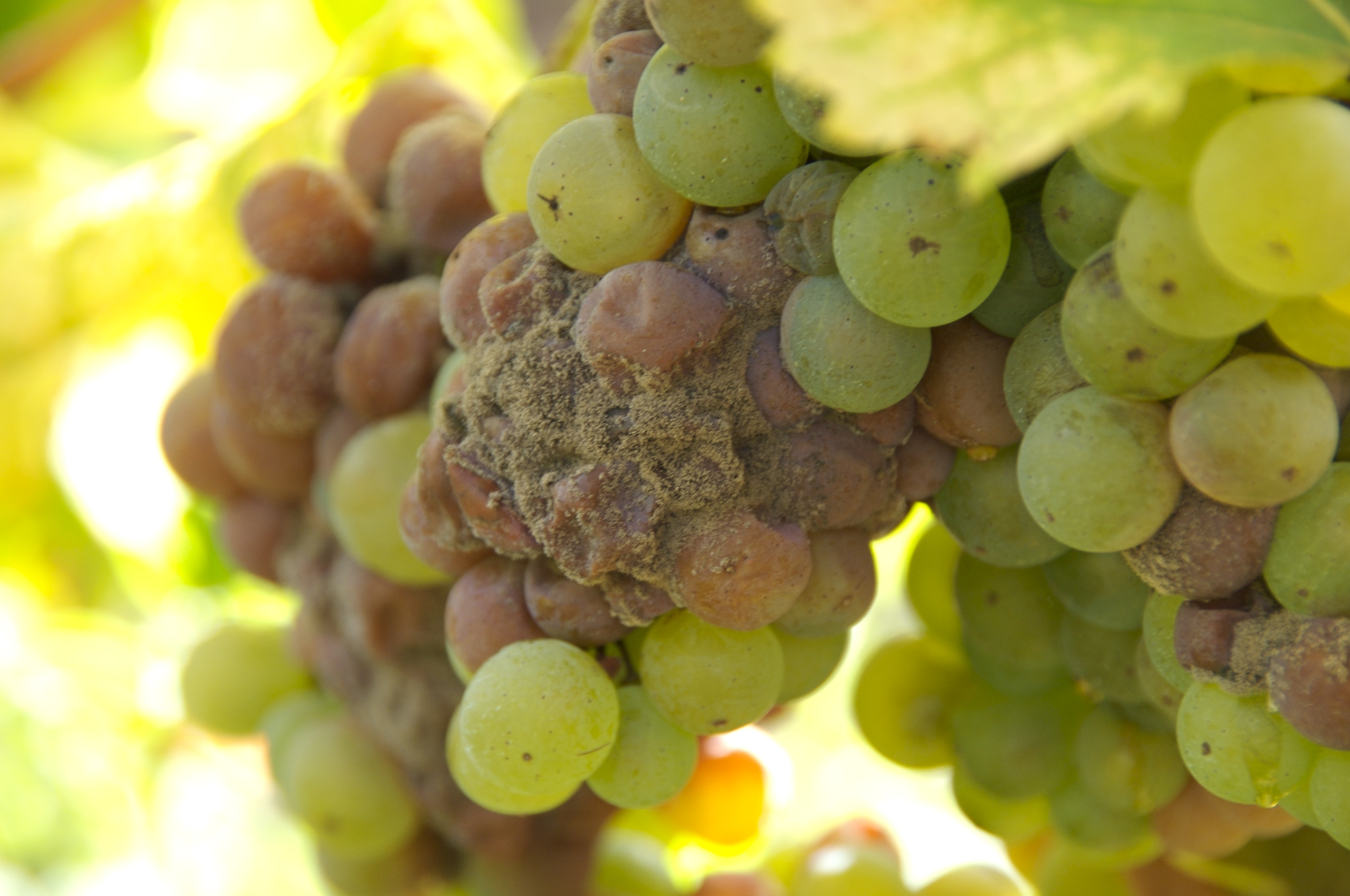
Last week, we covered what Botrytis actually is and how this fungus helps create grapes that are perfect for sweet wines. Now let's talk about how these wines are actually made.

As explained in last week's Wine 101, the fungus helps create an environment that allows the grapes to shrivel and concentrate its sugar content. During the fermentation of these grapes, there is so much sugar that the yeast cannot ‘eat’ all the sugar, and gets ‘killed’ by the alcohol when it reaches a certain point, hence giving you a sweet wine with a fair amount of alcohol.

 It also adds flavor components to the wine, which characteristic aromas of honey, beeswax or ginger. The color will usually be a deep shiny gold and offer luscious, addictive aromas, very easily recognizable. Because of the dehydration and the sensitivity of the grapes at that time (you can lose all your production if it rains a few days before harvest), the price of these wines can sometime go quite high. This is why it often comes in a half bottle. It seems cheaper, but also, it is hard to drink many glasses of these sweet wines.

Mostly white grapes are used, with a few having a certain affinity for the fungus: Sauvignon Blanc, Semillon, Riesling, Gewurztraminer, Pinot Gris or Muscadelle. The best ones you would find come from the Bordeaux region, especially from the villages around Sauternes, beside the Garonne River like our new arrival. It’s a stunner! You can also find great ones from Alsace in France, Germany (for Spätlese level and above), Hungary (and its famous Tokaji wines), or also Australia, which has a long history with sweet wines.

Botrytis wines can be drunk as a pre-dinner drink or with dessert. A little tip for matching sweet wines and desserts: always go with the same color for both – meaning that you should try to pair fruit-based desserts with yellow wines like botrytis wines, and pair chocolate desserts with red sweet wines, like Port or Maury. Meanwhile, the best pairing to goes with a Noble wine? Go French and try this match made in heaven with Foie Gras!

So with centuries of practice, winemakers have managed to turn around this pesky situation to their advantage, managing to create liquid gold from hideous, moldy, ugly-looking shriveled grapes!

Thursday, 4 September 2014


Botrytis Cinerea (also known as Noble Rot) is a fungus which can affect many plants and fruits (strawberries, for example, are very sensitive to it). However, it is predominantly ‘used’ in winemaking. Winemakers dread seeing this disease appear in their vineyards, but have learned how to turn it around and use it, on specific occasions, to create marvelous wines. If winemakers spot it in their vineyards which they do not want to use for sweet wines, it will trigger the beginning of the harvest as soon as possible, to limit the effect.

Botrytis Cinerea needs specific environmental conditions to grow in a vineyard. It usually starts developing from early September through October, when the weather has cooled down. The ‘best’ (or worst if you do not want to see it on vineyard) conditions for its development will include cool nights and morning, which bring fog that will deposit a very thin layer of water on the grapes. This is followed by hot sunny days, which will allow the fungus – naturally present in the atmosphere at that time of the year - to develop.

If the weather stays too humid in day time, the fungus will turn into ‘Grey Rot’, which develops very differently, and the grapes won’t be able to be used. The effect caused by the Botrytis Cinerea? It attacks bunches, creating a cover of mold, which actually dehydrates the grapes causing them to shrivel up. By removing the water, it concentrates the sugar contents, which results in intense, viscous and syrupy wines.

So yes, it is indeed a fungus that helps make these lovely sweet wines though not added to it. In the next Wine 101, I'll talk more about the how the wines are made and their flavors as well as food pairing suggestions!

Thursday, 28 August 2014

‘Blanc de Blancs’ (White of White) and ‘Blanc de Noirs’ (White of Black) are French terms, used mostly to describe sparkling wines, but you may find it occasionally used for some regular wines.

These terms represent the type of grapes used to make the wines. ‘Blanc de Blancs’ are ‘classic’ white grapes with ‘white’ skins and ‘white’ juice (they are called so even if colors go from yellow to green. It's a simpler way to term them). Champagnes, for example, that are made solely with Chardonnay grapes.

On the other hand, ‘Blanc de Noirs’ Champagnes are made from black grapes (Pinot Noir and Pinot Meunier mostly). They are produced using grapes with black skins, but white juices! So after harvest, the grapes are directly pressed, extracting the ‘white’ juice. To obtain classic red Pinot Noir, the juices and skins will be macerated together for the color to be extracted from the skins. This is why Pinot Noirs are very often lighter in colour compared to other red grapes (Cabernet, Shiraz), which have a darker colour and more tannins.

Classic Champagnes are a blend of both ‘white’ and ‘black’ grapes, to create a balance of aromas and a recognizable style. Meanwhile, Grand Cru Villages and areas have different soil types, and some are solely planted with a single type of grape. Wines from the Côtes de Blancs sub-region for example with Grand Cru villages like Avize, Cramant or Oger would be made solely from Chardonnay, and would offer fresh, crisp, lighter Champagnes. Wines coming from the Vallée de La Marne sub-region like Ambonnay Grand Crus would be done mostly from black grapes, offering fuller bodied Champagnes. Some white wines are made from 100% Pinot Noir, but they are very hard to come by, as production is very sparse with only a handful of wineries making it rather than ‘classic’ red wines, which would sell more easily.

Check out our range of Champagnes and see if you identify the blancs from the noirs!

Monday, 11 August 2014


I often hear this misconception that red wines should be served at room temperature. Yes, they are the best at ‘room-temperature’, but do note that this is a ‘Westerner’ term. The room temperature in France is not exactly the same than that in Malaysia!

To be specific,the term is used to advice wine drinkers to bring a wine up to room temperature, for serving and not for storing. Let me give you a personal example: back home in France at my parents place, the wines are stored in the garage, in a dark corner. Not the most optimal place but we don’t have a wine fridge. However in my region it rarely gets as hot as it does here. There people complain of it being ‘very hot’ at 25 degrees! In winter (outside temperature will be around 3 to 8 degrees), the bottles are stored at about 10 degrees in the garage.

If we want to open one (or 6!) for dinner, we have to bring it inside a few hours before dinner, to bring it ‘up’ to room-temperature, for better enjoyment. In fact, I would usually open the bottle, and leave it close to ( but not directly in front) of the fireplace to slowly ‘wake’ it up.

Similarly, here in Malaysia, it is recommended that you serve white wines around 8 to 12 degrees and reds at 16 to 20 degrees (which is well below the Malaysian room temperature of 23 to 26 degrees. Too cold and the aromas will be numbed. Too warm (as I often encounter here unfortunately) and the wines won’t be at its optimal enjoyment level. It might be too acidic or the alcohol might be too ‘aggressive’.

For red wines, if you don’t have a wine fridge, I would recommend that you put the bottle in the fridge a couple of hours – it may be a tad too cold when you first take it out. However it will quickly increase and arrive at a perfect temperature of enjoyment! If you really like your wines and want to be sure they are at the perfect temperature, I would highly recommend that you to invest in a good wine storage unit, it is worth it.

 Take a look at Wine Talk's selection of wine cabinets designed in Denmark by Vintec. Oh and we're giving away a bottle of Moët for every cabinet purchased this month so you can officiate your new wine cabinet with quality bubbly!

Thursday, 7 August 2014


Champagne has a great reputation mostly due to the high-quality and strong characteristic of its wines. Creating Champagne includes techniques, which are actually forbidden in other parts of France, in order to have the AOC classification. For example blending wines from different vintages, or mixing red and white wines to create Rosé Champagnes.

One other specificity of the region – and of other wines using the similar méthode Traditionelle is the DOSAGE. To understand how this works, you have to go back to the roots of how Champagne is made.

In short, once grapes are harvested, a regular wine is made, with a lower alcohol level (8-10%). Then, this wine is blended in Reserve wines from the previous years, in order to create the trademark flavors of the Champagne House (except for Vintage wines, which have to come from a single year, and is done only if the quality is exceptional).

At this point, a bit of sugar and yeast are added into the wine, which will bring about the 2nd fermentation in the bottle, creating the bubbles! After a minimum of 15 months, the bottle can be moved to the next process, the ‘Remuage’ (Riddling). The bottle neck is inserted in a wooden rack, and progressively lifted and turned daily to bring up all the sediments to the top of the neck across a period of 4 to 6 weeks.

Then, the cork (actually a simple metal cap) is removed, either as it is or after being dipped into liquid nitrogen (to freeze the sediments). The pressure within the bottle will naturally expel these sediments. 

Here, the ‘liquide de dosage’ is added, to create a balance to the wine. It is usually made with Reserve wine, which has added sugar. Depending on the amount of sugar, the classification will be different:

BRUT ZERO: No sugar added
EXTRA-BRUT: less than 6 grams of sugar per liter
BRUT: less than 15 grams of sugar per liter
EXTRA-DRY: 12 to 20 grams of sugar per liter
DRY: 17 to 35 grams of sugar per liter
DEMI-SEC: 33 to 50 grams of sugar per liter
DOUX: more than 50 grams of sugar per liter

If you love champagnes, you can enjoy Moët & Chandon at only RM190 (usually RM268). Or for a more premium option, try Pol Roger Brut Vintage at RM351. Dom Perignons are at RM552 (usual RM588) at www.winetalk.com.my
 

Wine Talk is Malaysia’s premier online wine delivery service where you can buy, purchase or order wines online and have them delivered to your doorstep. Wine Talk delivers to KL, PJ, Selangor, Johor Bahru and other cities within West Malaysia. Wine Talk’s wines are personally selected and handpicked by sommelier David Stephan. And with Wine Talk’s promise --- Guaranteed Satisfaction, Guaranteed Price, Delivered To Your Home --- wines are now even more pleasurable. With more than 400 labels of wines, you can easily find wines to suit your taste. Wine Talk’s Wine Club is the first of its kind in Malaysia. The Wine Club is an exclusive service with no membership fee wherein members will receive wine cases on a monthly or bi-monthly basis, free delivery included. Members will receive great value wines with a different selection every time, handpicked by David. The selection will feature popular labels and also fun discoveries, which a lot of people may not have thought to try. It comes with a personalized booklet that details the history of the winery, grape varietals, tasting notes, food pairing and more. Wine Talk also provides wine advice for events such as weddings, parties and gatherings. David Stephan makes wine selection easier with his experience on food and wine.
Wine Talk Malaysia – Great Wines Made Easy.


© 2012. Design by Main-Blogger - Blogger Template and Blogging Stuff